18 October 2026
 Thursday, 24th September 2026
 Hilton Abu Dhabi, Yas Island, UAE
Event Date
Thursday, 24th September 2026
Event Location
Hilton Abu Dhabi, Yas Island, UAE
13 July 2026
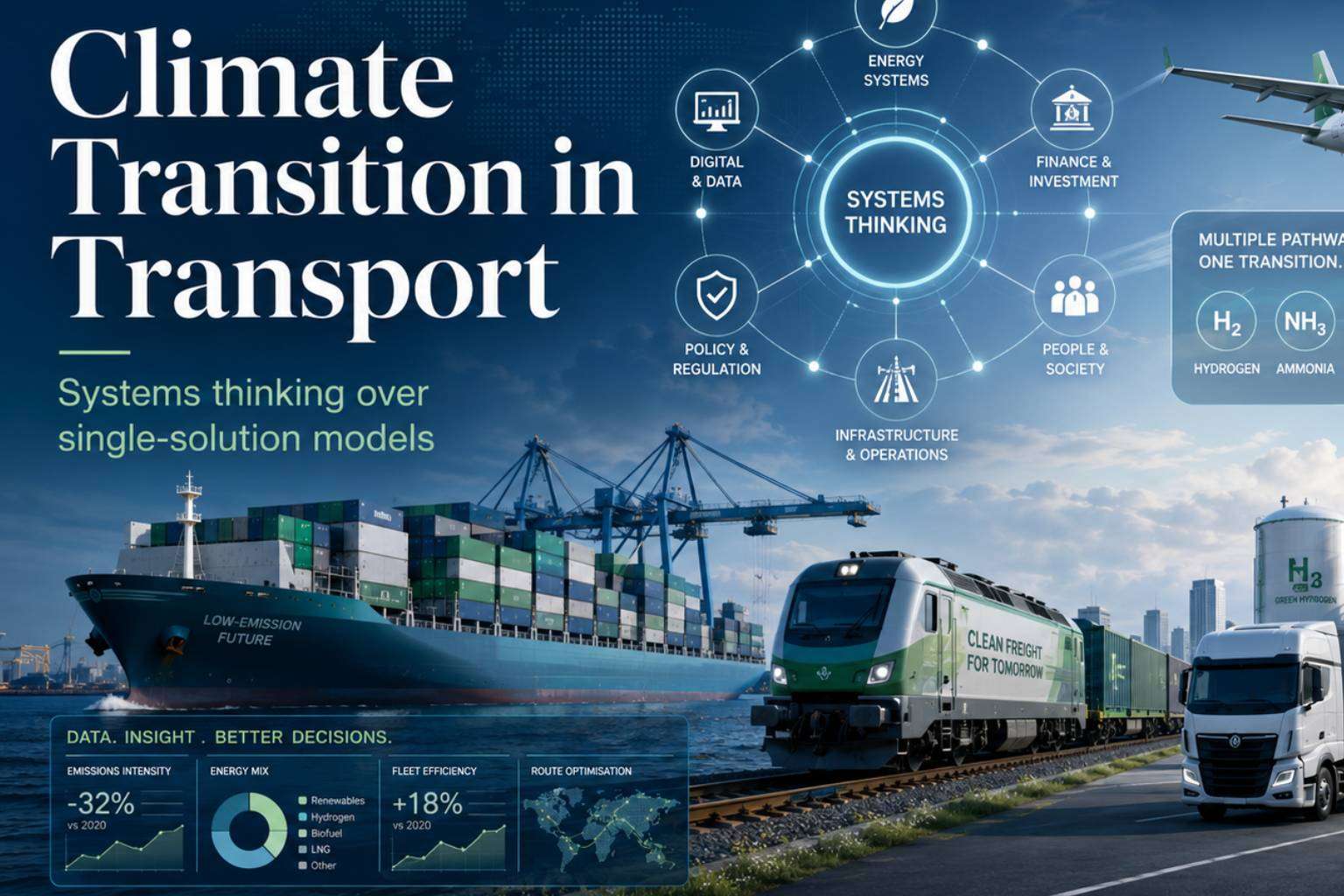
The global transport sector is undergoing a fundamental shift in how decarbonisation is understood and approached. Early transition strategies often focused on identifying single dominant solutions, such as a specific alternative fuel or technology pathway. However, this approach is no longer considered sufficient.
The complexity of global transport systems has led to a shift toward systems thinking, where decarbonisation is understood as the interaction between energy systems, infrastructure networks, financial markets, and regulatory frameworks.
The Limits of Single-Solution Thinking
Initial decarbonisation models often assumed that one or two dominant fuel pathways would eventually replace conventional marine and aviation fuels. However, this assumption has not materialised.
Instead, multiple fuel pathways are emerging simultaneously. Ammonia, methanol, hydrogen, LNG, and advanced biofuels are all being developed in parallel, each with distinct advantages and constraints.
According to International Energy Agency assessments, no single low-emission fuel currently meets all requirements for scalability, cost competitiveness, safety, and infrastructure readiness across global transport modes.
This has made it clear that transition pathways will be plural rather than singular.
Systems Interdependence in Transport Decarbonisation
Transport decarbonisation is increasingly defined by interdependence between four core systems:
These systems do not operate independently. A change in one system directly affects the others.
For example, regulatory changes such as carbon pricing influence fuel demand, which in turn affects infrastructure investment decisions and financial risk assessments. Similarly, delays in infrastructure development can slow fuel adoption, even when regulatory incentives are in place.
Evidence of a Multi-Pathway Transition
Current market developments confirm that the transport transition is evolving into a multi-pathway system rather than a linear replacement process.
This reflects a structural reality: the global transport system is too large and heterogeneous to be decarbonised through a single technological pathway.
The Role of Digitalisation and Data Systems
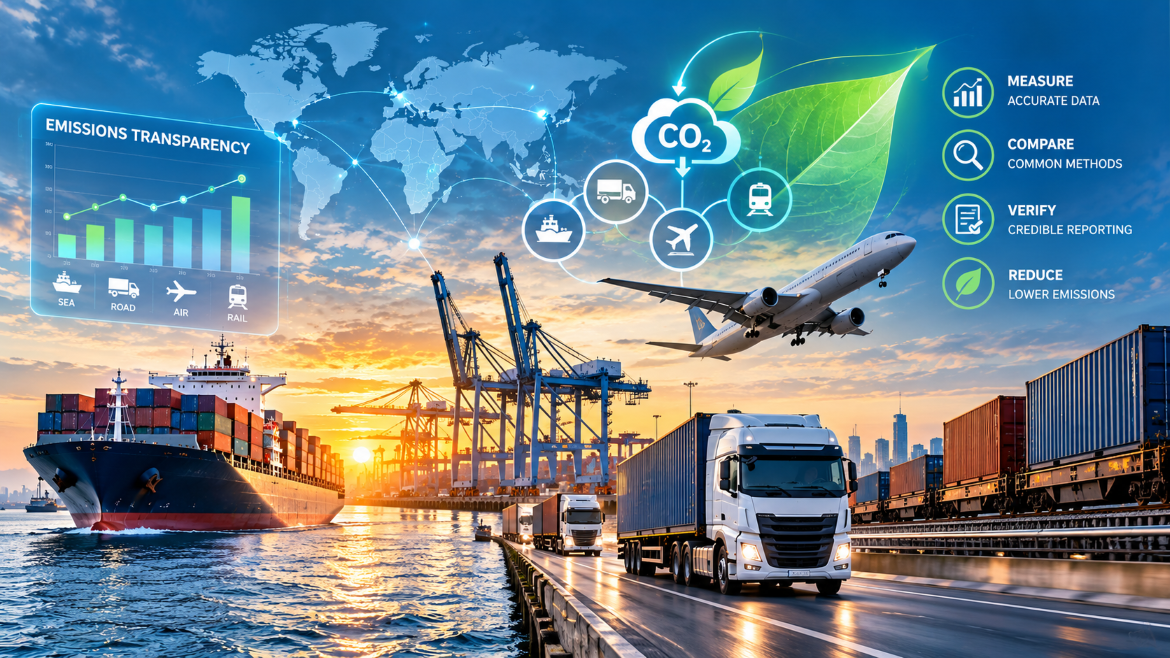
Digital systems are becoming essential enablers of systems-based decarbonisation. Measurement, reporting, and verification platforms are increasingly used to track emissions across complex supply chains.
According to industry estimates, digital optimisation in routing, fleet management, and operational efficiency can contribute meaningful reductions in fuel consumption. However, these gains must be integrated into broader system-level changes to achieve long-term decarbonisation goals.
Data transparency is also becoming critical for regulatory compliance, particularly under emerging carbon pricing frameworks and emissions trading systems.
Financial System Adaptation
Financial markets are also adapting to systems-based transition dynamics. Investment decisions are increasingly incorporating scenario analysis that accounts for multiple fuel pathways, regulatory uncertainty, and infrastructure development timelines.
This has led to a shift away from single-asset optimisation toward portfolio-based approaches that balance exposure across different transition pathways.
Insurance and risk assessment models are also evolving to reflect systemic uncertainty rather than isolated project-level risk.
Integration Over Substitution
The defining feature of the current transport transition is not substitution but integration. Instead of replacing one system with another, the sector is evolving toward a multi-layered structure where multiple fuels, technologies, and regulatory frameworks coexist.
Success in this environment depends on the ability to manage complexity rather than eliminate it. Systems thinking provides a framework for understanding these interactions and designing strategies that account for interdependencies across the entire transport ecosystem.