18 October 2026
 Thursday, 24th September 2026
 Hilton Abu Dhabi, Yas Island, UAE
Event Date
Thursday, 24th September 2026
Event Location
Hilton Abu Dhabi, Yas Island, UAE
20 July 2026
For much of the climate debate, reducing greenhouse gas emissions has been the dominant objective. Governments, businesses and investors have focused on lowering carbon intensity, accelerating clean technologies and supporting the transition to net zero. These efforts remain essential, but they represent only one side of the challenge.
Climate change is no longer a future risk. Its impacts are already affecting transport systems around the world.
Extreme weather events, rising sea levels, prolonged heatwaves and changing rainfall patterns are disrupting ports, damaging infrastructure and exposing vulnerabilities across global supply chains. The transport sector is increasingly recognising that mitigation alone is not enough. Alongside decarbonisation, adaptation is becoming a strategic imperative.
Building resilience into transport systems is now essential for protecting economic activity, maintaining trade flows and ensuring long-term competitiveness.
Climate Risks Are Reshaping Transport Planning
Transport infrastructure is designed to operate over decades. Ports, airports, rail networks and highways are expected to remain functional through changing environmental conditions, making them particularly vulnerable to long-term climate risks.
Flooding can interrupt port operations and damage terminals. Higher temperatures can reduce the efficiency of rail systems and increase maintenance requirements. Storm surges threaten coastal infrastructure, while stronger tropical cyclones can disrupt shipping schedules and supply chains across entire regions.
The World Bank estimates that climate-related disruptions to transport infrastructure could result in substantial economic losses if resilience measures are not integrated into future planning. These impacts extend beyond physical assets, affecting trade reliability, insurance costs and investor confidence.
As a result, climate adaptation is moving from an environmental consideration to a core business and infrastructure strategy.
Ports Face Growing Climate Exposure
Ports occupy a central position in global trade, handling more than 80% of world merchandise trade by volume. Many are located in low-lying coastal areas that face increasing exposure to sea level rise, coastal erosion and extreme weather.
To address these risks, port authorities are investing in resilience measures such as elevated infrastructure, improved drainage systems, flood protection, stronger breakwaters and climate-informed master planning. Digital technologies are also being deployed to improve weather forecasting, monitor infrastructure performance and support operational decision-making during disruptive events.
These investments are designed not only to protect assets but also to reduce downtime and strengthen the reliability of global supply chains.
Supply Chain Resilience Is Becoming a Competitive Advantage
The disruptions experienced during recent years have highlighted the importance of resilient supply chains.
Climate-related events, combined with geopolitical tensions and shifting trade patterns, have demonstrated that transport networks require greater flexibility. Companies are responding by diversifying suppliers, increasing regional production capacity and investing in digital visibility across logistics operations.
Artificial intelligence, predictive analytics and real-time monitoring are helping operators identify potential disruptions earlier and optimise routing decisions before problems escalate.
This combination of physical resilience and digital intelligence is becoming a defining feature of modern logistics systems.
Financing Adaptation
Building climate-resilient infrastructure requires significant investment, but the economic case is becoming increasingly compelling.
Financial institutions are incorporating climate resilience into infrastructure financing decisions, recognising that assets designed to withstand future climate conditions are likely to deliver stronger long-term returns.
Multilateral development banks are also expanding support for resilient transport infrastructure, particularly in regions where climate impacts are expected to be most severe.
Public-private partnerships will play an important role in mobilising the capital needed to modernise ports, logistics hubs and transport corridors while reducing long-term operational risks.
Integrating Adaptation with Decarbonisation
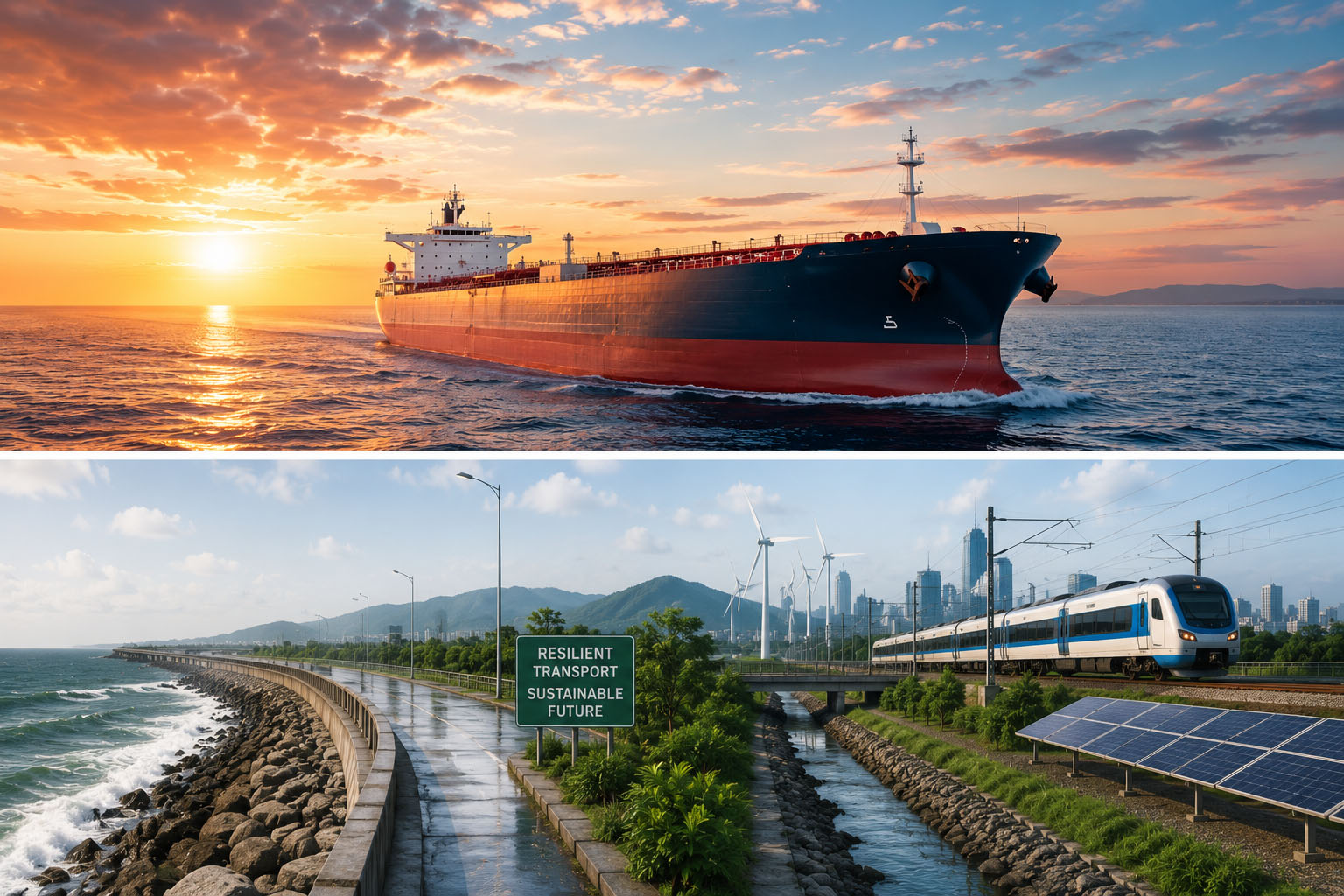
The most effective projects increasingly combine emissions reduction with climate resilience.
For example, port modernisation programmes may include shore power systems, alternative fuel infrastructure and flood protection measures within a single investment strategy. Similarly, transport corridors can integrate low-carbon technologies alongside enhanced drainage, heat-resistant materials and digital monitoring systems.
This integrated approach improves both environmental performance and operational reliability.
Rather than treating adaptation and decarbonisation as separate agendas, governments and industry leaders are recognising the benefits of addressing both simultaneously.
Collaboration Will Strengthen Resilience
No organisation can build resilient transport systems alone.
Governments establish planning frameworks and infrastructure standards. Port authorities manage operational assets. Logistics providers improve supply chain flexibility. Financial institutions support long-term investment, while technology companies develop monitoring and forecasting tools.
Effective collaboration across these stakeholders is essential for creating transport systems capable of withstanding both climate and economic shocks.
International cooperation is equally important, particularly where major trade routes and cross-border infrastructure are involved.
Looking Ahead
Climate adaptation is likely to become one of the defining infrastructure themes of the coming decade.
Transport networks that fail to prepare for changing climate conditions risk higher maintenance costs, more frequent operational disruptions and declining competitiveness.
By contrast, resilient infrastructure can strengthen trade reliability, attract investment and support sustainable economic growth.
The challenge is no longer whether adaptation should occur, but how quickly it can be integrated into transport planning and investment.
Conclusion
The transition to low-carbon transport cannot be achieved through emissions reduction alone.
Climate impacts are already reshaping the operating environment for ports, shipping, logistics and infrastructure. Building resilience into these systems is essential for maintaining global connectivity while supporting long-term climate objectives.
The future of transport will therefore depend on two complementary priorities: reducing emissions and adapting to the changing climate.
The most successful transport systems will be those designed not only for a net-zero future but also for a more resilient one.