18 October 2026
 Thursday, 24th September 2026
 Hilton Abu Dhabi, Yas Island, UAE
Event Date
Thursday, 24th September 2026
Event Location
Hilton Abu Dhabi, Yas Island, UAE
27 July 2026
The global transport sector has no shortage of climate ambitions.
Governments have established net zero targets. International organisations have adopted decarbonisation strategies. Transport companies are ordering cleaner vessels, investing in electric fleets and exploring alternative fuels.
Yet a fundamental question remains largely unanswered: Will the infrastructure required to support the transition be built quickly enough?
The challenge facing transport is increasingly shifting from technology development to deployment. Many of the solutions needed to reduce emissions already exist or are approaching commercial readiness. What remains uncertain is whether the infrastructure, financing and policy frameworks required to scale them can develop at the same pace.
For shipping, this means alternative fuel production and bunkering infrastructure. For aviation, it means sustainable aviation fuel supply chains. For road transport, it means charging networks and hydrogen infrastructure. Across all modes, it means modernising logistics systems and connecting them through increasingly digital and integrated networks.
The infrastructure investment gap may ultimately determine whether global transport can meet its climate ambitions.
The Scale of the Challenge
Transport infrastructure has always required long-term investment.
Ports, airports, railways, highways and logistics hubs are typically built to operate for decades. The transition to net zero therefore creates a unique challenge: existing assets must continue operating while new low-carbon infrastructure is developed alongside them.
This creates significant capital requirements.
The International Energy Agency has repeatedly highlighted the scale of investment needed to transform global energy systems. While clean energy investment has expanded rapidly, transport infrastructure remains unevenly financed across regions and sectors.
The largest challenge is not necessarily the absence of capital. It is directing capital towards projects that are commercially viable, technologically credible and supported by stable policy frameworks.
Ports Are at the Centre of the Investment Challenge
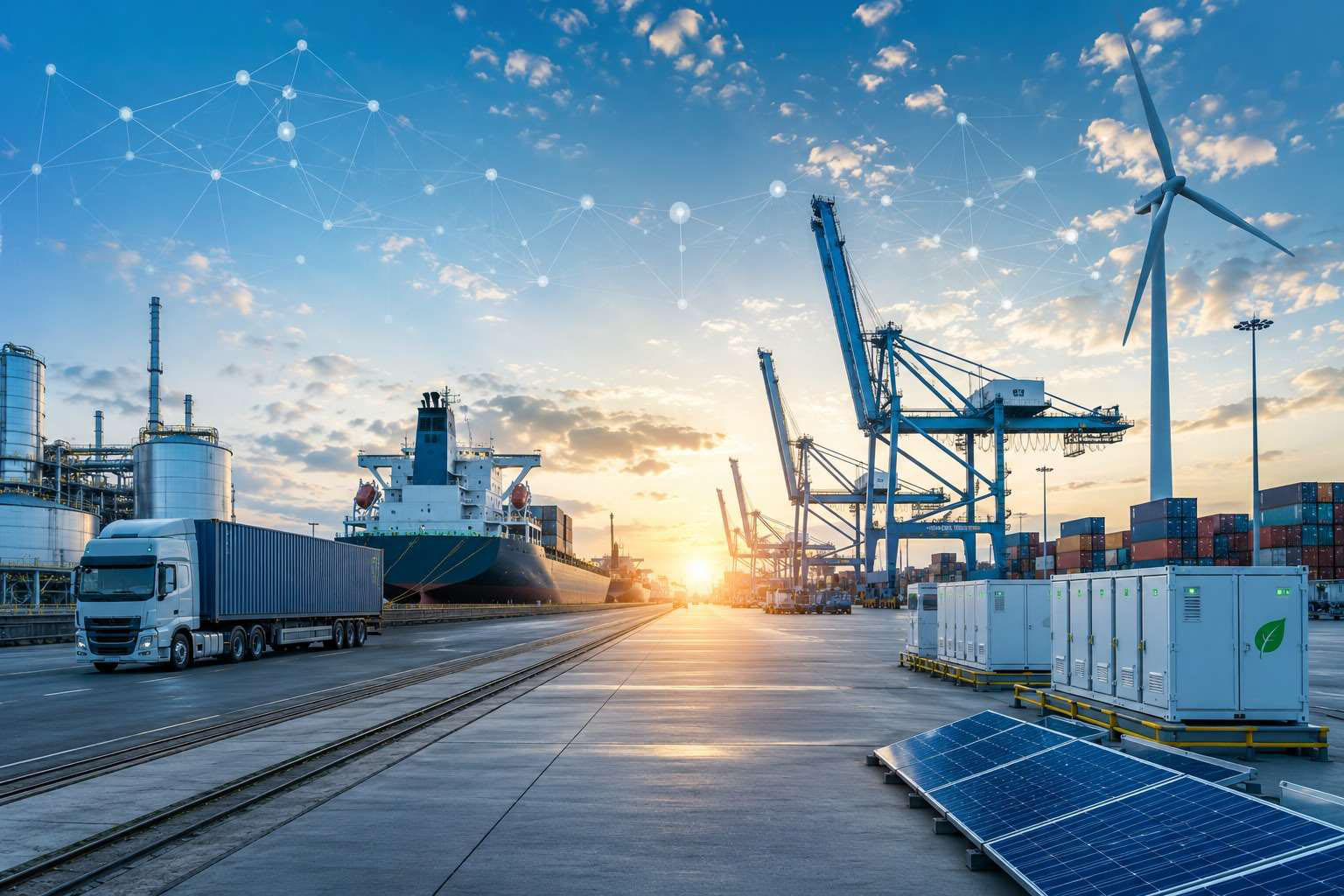
Few assets illustrate the infrastructure challenge more clearly than ports.
Future ports will need to support multiple energy systems simultaneously. Shore power, alternative fuel bunkering, battery charging, hydrogen derivatives and digital energy management are likely to become increasingly important.
At the same time, ports must continue to handle growing cargo volumes efficiently.
This creates a complex investment equation.
Port authorities and private operators must determine which technologies to prioritise when the future fuel mix remains uncertain. Investing too early in infrastructure for a fuel that fails to achieve scale creates stranded asset risk. Waiting too long, however, could leave ports unprepared for changing market demand.
The solution may lie in modular and adaptable infrastructure that can evolve as fuel markets develop.
Alternative Fuels Require Entire Ecosystems
The transition to alternative fuels cannot be achieved by changing the fuel used onboard a vessel or vehicle alone.
Green hydrogen, ammonia and methanol require production capacity, storage facilities, transportation networks and distribution infrastructure.
The same applies to sustainable aviation fuel, where production capacity and feedstock availability remain important constraints.
This creates a chicken-and-egg problem.
Fuel producers are reluctant to invest without sufficient demand. Transport operators are hesitant to order large numbers of alternative-fuel assets without confidence that fuel will be available.
Infrastructure investment must therefore occur across the entire ecosystem simultaneously.
This is one reason why public policy and coordinated investment are becoming increasingly important.
Public-Private Partnerships Will Be Critical
Governments cannot finance the entire transition alone.
At the same time, private investors may be unwilling to commit capital to projects with uncertain returns, long development timelines or significant regulatory risk.
Public-private partnerships can help bridge this gap.
Governments can provide:
Private capital can provide:
Blended finance can also help reduce risk by combining public and private funding.
This approach is particularly important in emerging markets where infrastructure needs are often greatest but financing costs can be significantly higher.
Climate Finance Must Become More Transport-Focused
Climate finance has expanded considerably, but investment remains concentrated in certain sectors.
Clean power and electrification have attracted substantial capital, while hard-to-abate transport sectors such as shipping and aviation continue to face higher financing challenges.
This is partly due to technological uncertainty.
Investors may be comfortable financing established renewable energy technologies but less willing to fund infrastructure associated with emerging fuels whose long-term commercial viability remains uncertain.
This makes risk-sharing mechanisms essential.
Guarantees, first-loss capital and transition finance could help mobilise investment into sectors that are strategically important but commercially difficult to finance.
Policy Certainty Matters as Much as Capital
Infrastructure investors typically think in decades.
Transport assets can have lifespans of 20 years or more, meaning investors need confidence that policy frameworks will remain sufficiently stable over the life of the project.
Frequent changes in regulation, inconsistent carbon pricing and uncertainty around fuel standards can increase investment risk.
For this reason, clear long-term policy frameworks are becoming a critical component of infrastructure finance.
The challenge for governments is to provide sufficient certainty without locking the market into technologies that may later become obsolete.
Digital Infrastructure Is Part of the Transition
The infrastructure conversation is increasingly expanding beyond physical assets.
Digital systems are becoming essential to managing low-carbon transport networks.
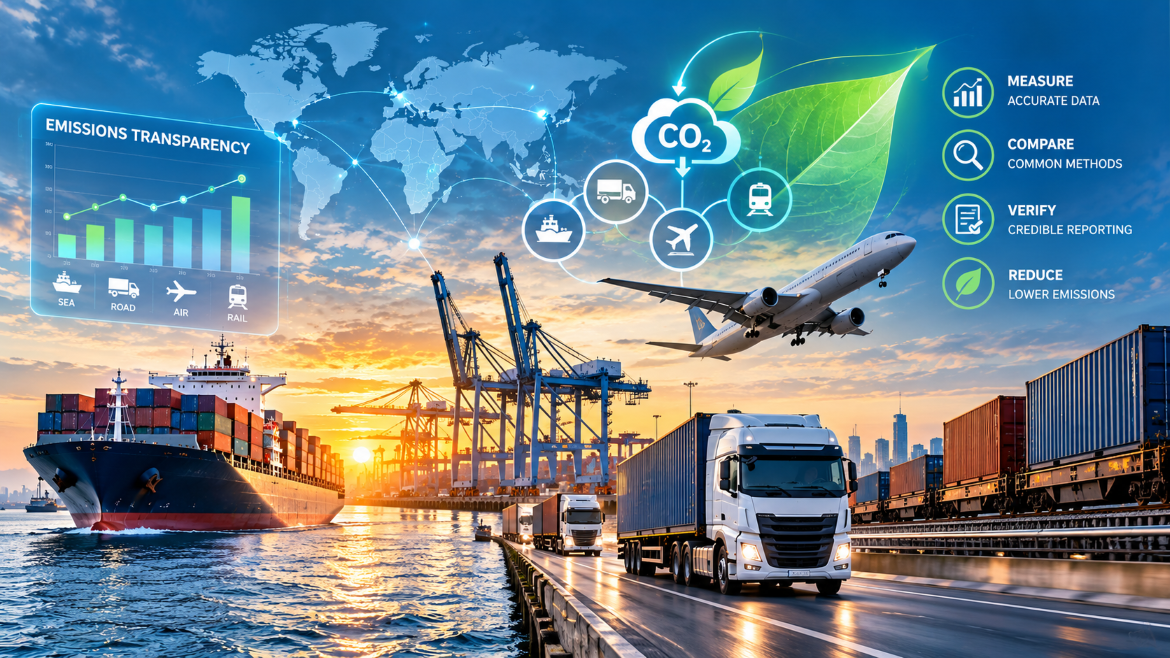
Ports need real-time data to coordinate vessel arrivals and energy consumption. Logistics companies require digital platforms to optimise cargo movements. Regulators need reliable emissions data to enforce compliance.
Digital infrastructure can therefore improve both efficiency and transparency.
The combination of physical infrastructure and digital systems is likely to become a defining feature of future transport ecosystems.
The Emerging Investment Opportunity
The infrastructure gap is also an opportunity.
As transport systems transition, new markets are emerging across:
Investors that understand the relationship between these sectors may identify opportunities that are not visible when transport infrastructure is viewed in isolation.
The transition is creating a new infrastructure economy in which energy and transport are increasingly integrated.
Looking Ahead
Closing the infrastructure investment gap will require a fundamental shift in how transport projects are planned and financed.
Rather than treating ports, fuel networks, logistics hubs and transport corridors as separate assets, policymakers and investors will increasingly need to consider them as interconnected systems.
This approach can improve capital efficiency and reduce duplication while allowing infrastructure to evolve with changing technologies.
Conclusion
The future of net zero transport will ultimately be determined by what is built.
Technologies may be available, but without fuel networks, charging infrastructure, resilient ports, digital systems and modern logistics corridors, their impact will remain limited.
Closing the infrastructure investment gap will require capital, but capital alone will not be enough.
It will require policy certainty, innovative financing structures, public-private collaboration and a willingness to invest in systems rather than isolated projects.
The transition to net zero transport is therefore becoming an infrastructure challenge as much as a climate challenge.
The countries, companies and investors that can build the foundations of the new transport economy will be best positioned to shape its future.