12 August 2026
 Thursday, 24th September 2026
 Hilton Abu Dhabi, Yas Island, UAE
Event Date
Thursday, 24th September 2026
Event Location
Hilton Abu Dhabi, Yas Island, UAE
29 June 2026
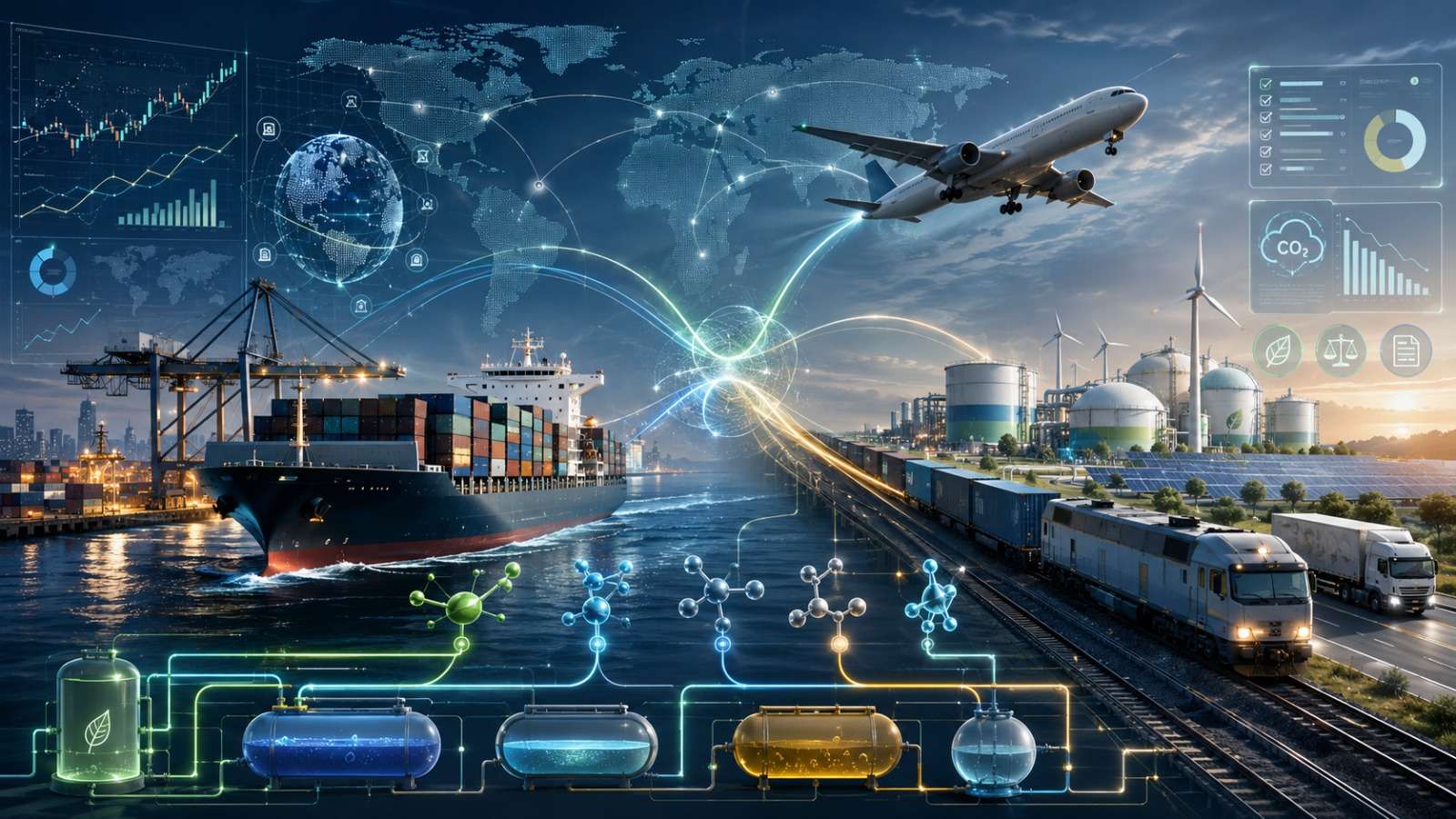
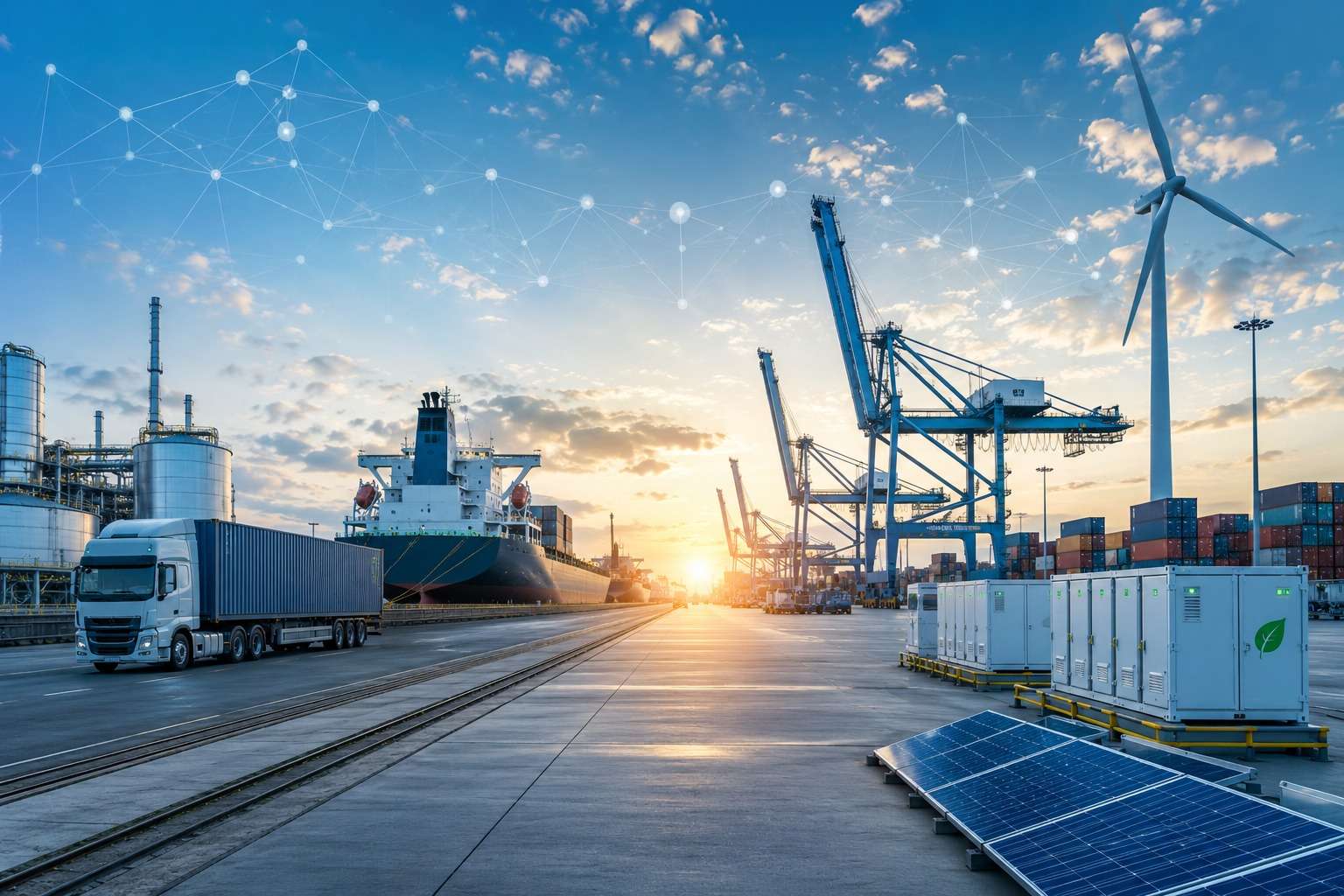
The global transport sector is undergoing a structural transformation that is redefining how decisions are made across shipping, aviation, and logistics. At the core of this transformation is the convergence of three traditionally separate domains: finance, fuel systems, and regulatory frameworks.
This convergence is creating what can be described as a new transport economy, where emissions performance, regulatory exposure, and capital allocation are increasingly interconnected.
Regulation as the Structural Baseline
Regulatory frameworks are becoming the foundation of this new system. International and regional bodies are introducing increasingly detailed mechanisms to reduce emissions and guide sector transformation.
The International Maritime Organization’s revised greenhouse gas strategy has set a clearer direction for maritime decarbonisation, focusing on lifecycle emissions reduction and fuel intensity improvements. While implementation details continue to evolve, the strategic direction is now established.
At the regional level, mechanisms such as the European Union Emissions Trading System and FuelEU Maritime are introducing direct financial implications for emissions. These frameworks are reshaping cost structures by embedding carbon pricing into operational decision making.
The result is a shift from voluntary compliance to embedded regulatory cost exposure. Transport operators must now integrate regulatory considerations into core business planning rather than treating them as external constraints.
Finance Responding to Structural Risk
Financial institutions are increasingly integrating climate transition risks into investment decision frameworks. In transport sectors, this includes evaluating asset exposure to carbon pricing, fuel transition risk, and regulatory compliance uncertainty.
This has led to a gradual revaluation of transport assets based on emissions intensity and transition readiness. Assets that are compatible with emerging regulatory frameworks are becoming more attractive to capital markets, while those with high emissions exposure face increasing financing costs.
Insurance markets are also adapting. Underwriting models are evolving to reflect climate-related operational risks, including fuel volatility, regulatory change, and geopolitical disruption.
Despite these developments, capital flows remain uneven. While there is significant growth in sustainable finance instruments, access to transition capital is not uniform across all regions or asset classes.
Fuel Systems in Transition
Fuel systems are undergoing one of the most complex transitions in the transport sector. Unlike previous energy transitions, there is no single dominant replacement for conventional fuels.
Instead, multiple pathways are emerging simultaneously, including ammonia, methanol, hydrogen, LNG, and biofuels. Each pathway has different implications for infrastructure, cost, safety, and lifecycle emissions.
This multi-pathway environment creates complexity for both operators and investors. Decisions are no longer based solely on fuel efficiency but also on regulatory alignment, infrastructure availability, and long-term scalability.
As a result, fuel strategy is becoming a core element of transport competitiveness rather than a purely operational consideration.
Interdependence as the Defining Feature
The defining characteristic of the new transport economy is interdependence. Finance, fuel systems, and regulation are no longer separate domains. They are mutually reinforcing components of a single system.
Regulation influences fuel demand. Fuel availability influences investment decisions. Finance determines the pace at which infrastructure and technology can scale.
This interdependence creates both opportunity and complexity. On one hand, it enables coordinated acceleration of decarbonisation when aligned effectively. On the other hand, misalignment between these systems can slow progress and increase costs.
Geopolitical and Structural Complexity
The transition is also taking place within a broader context of geopolitical uncertainty and supply chain restructuring. Trade routes are being reconfigured, energy security priorities are shifting, and regional policy approaches are diverging.
These factors add another layer of complexity to transport decarbonisation. Investment decisions must now account not only for climate considerations but also for geopolitical risk and structural volatility in global trade flows.
The global transport sector is no longer operating within a traditional linear market structure. It is evolving into an interconnected system where finance, fuel, and regulation are deeply interdependent.
Understanding this convergence is essential for navigating the next phase of the transition. Success will depend on the ability to operate within this integrated system rather than treating its components in isolation.
12 August 2026

2 August 2026
26 July 2026