18 October 2026
 Thursday, 24th September 2026
 Hilton Abu Dhabi, Yas Island, UAE

Event Date
Thursday, 24th September 2026
Event Location
Hilton Abu Dhabi, Yas Island, UAE
16 September 2026
The transition to net zero is often described in terms of entire sectors. Shipping must decarbonise. Aviation must reduce emissions. Road transport must electrify. Ports must become cleaner. But the practical transition is unlikely to happen uniformly across every market, route and asset at the same time.
A different model is emerging: green corridors.
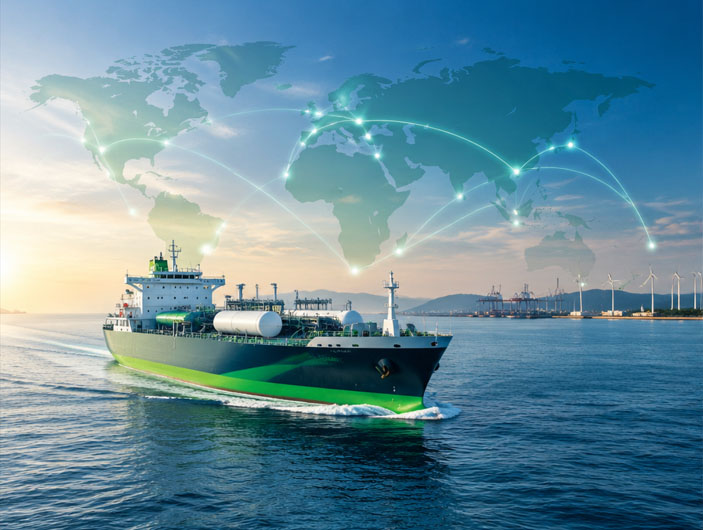
Rather than attempting to transform an entire global transport system simultaneously, green corridors concentrate investment, infrastructure, fuel supply, regulation and demand around specific routes. The objective is to create a sufficiently coordinated environment for lower-emission technologies to move beyond demonstration and into commercial operation.
That makes green corridors more than transport routes. They are becoming potential market-making mechanisms for the energy transition.
One of the biggest challenges facing transport decarbonisation is coordination.
A zero-emission vessel has limited value if suitable fuel is unavailable at its destination. A green fuel production facility needs reliable customers before committing large amounts of capital. Ports need demand before investing in bunkering or energy infrastructure. Cargo owners may want lower-emission transport but need confidence that it will be available at commercially viable terms.
Green corridors attempt to connect these decisions.
The Global Maritime Forum's 2025 annual progress report identified 84 active green shipping corridor initiatives worldwide, including 25 new initiatives launched during the year. Four had reached the realisation stage, where vessels, infrastructure or fuel production were moving into construction or operation.
The significance is not simply the number of projects. It is the growing recognition that decarbonisation requires coordinated action across an entire value chain.
Global shipping operates through established commercial networks. Cargoes move between particular ports, industries depend on recurring trade lanes and vessels operate on relatively predictable routes.
This creates opportunities for targeted decarbonisation.
A corridor connecting a major export region with an industrial import market may provide sufficient cargo volumes, fuel demand and port infrastructure to support an alternative-fuel business case. The same economics may be much harder to achieve across a fragmented network with uncertain demand.
This is why green corridors can function as transition laboratories at commercial scale.
They allow stakeholders to test fuel availability, bunkering, vessel operations, safety procedures, emissions accounting and commercial arrangements within a defined environment. Lessons can then be transferred to other routes.
The model is already becoming more geographically diverse. Green corridor initiatives have expanded into major developing economies including China, India, Brazil, Chile, Ghana and Kenya, highlighting the potential for the transition to create new fuel-production and maritime infrastructure markets beyond traditional shipping centres.
Alternative fuels have received substantial attention, but production alone will not create a functioning market.
The more difficult question is whether producers can secure sufficiently reliable demand to justify investment.
A June 2026 Global Maritime Forum initiative involving ports, fuel producers and shipping companies is examining a potential green corridor between Brazil's Port of Açu and Antwerp-Bruges. The project is assessing infrastructure, vessels and business models for transporting zero-carbon fuels such as e-ammonia and e-methanol, while also using these fuels for the maritime transport itself.
This illustrates an important shift.
The transition is increasingly moving from "Which fuel will work?" towards "Where can the entire system work together?"
That distinction could prove critical.
Green corridors do not eliminate regulatory uncertainty. In some respects, they make it more visible.
The IMO's Net-Zero Framework remains under development. At its September 2026 intersessional meeting, the IMO continued discussions on concerns surrounding the proposed framework, with further work scheduled before MEPC 85 in November and December.
The framework is important because global rules can influence the economics of alternative fuels, emissions performance and investment decisions. Its eventual design could therefore affect the commercial attractiveness of green corridors.
But regulatory uncertainty does not necessarily mean that all investment must wait.
The emergence of corridor projects suggests that governments and industry can begin developing local and regional transition ecosystems while international rules continue to evolve. This can include fuel standards, port incentives, infrastructure planning, public procurement and commercial agreements.
The objective is not to replace global regulation. It is to ensure that markets are capable of responding when stronger regulatory signals arrive.
Green corridors also change the role of ports.
Under the traditional model, ports primarily facilitate cargo movement. Under a decarbonised transport model, major ports could increasingly become energy and transition hubs.
That could involve alternative-fuel bunkering, renewable electricity, shore power, fuel storage, carbon accounting systems and connections to industrial energy networks.
The IMO has recognised the scale of this challenge. Its current work on renewable fuels and maritime infrastructure is examining global fuel production, supply and demand, port infrastructure and fuel supply chains, with the objective of identifying practical pathways for scaling renewable fuel deployment.
The implication is significant: the competitiveness of future ports may increasingly depend not only on how efficiently they handle cargo, but also on how effectively they connect ships to the emerging clean-energy system.
Another important development is the growing role of cargo owners.
Green transport cannot be built entirely around shipowners and fuel producers. Long-term cargo commitments can provide the demand certainty needed to support investment in vessels and fuel infrastructure.
This creates the possibility of new commercial structures in which cargo owners, carriers, fuel suppliers, ports and financial institutions share transition commitments and risks.
The strongest corridors may therefore be those where demand is visible before the infrastructure is fully built.
That could create a first-mover advantage for companies willing to commit early, while also allowing governments to target support towards routes with clear economic and environmental potential.
The ultimate test will be whether individual corridors can connect into broader networks.
A handful of green routes will not decarbonise global trade. But successful corridors can demonstrate technologies, establish fuel supply chains, develop standards, reduce uncertainty and create economies of scale.
The process could resemble the development of other transport networks: first through strategically important connections, followed by expansion as infrastructure, demand and commercial confidence increase.
This is where the concept becomes relevant beyond shipping.
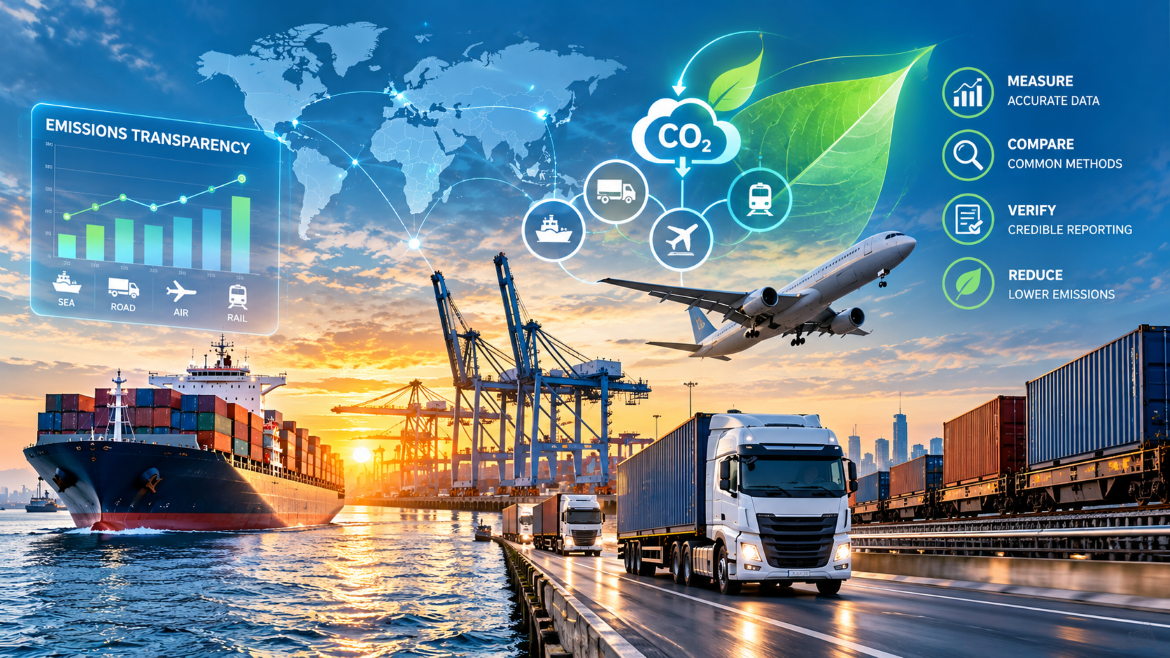
Green corridors could eventually link maritime transport with aviation, road freight, rail and inland logistics, creating low-emission trade routes across multiple modes.
The transition would then move from individual assets to connected transport ecosystems.
The global transport industry does not need to choose between ambitious long-term targets and practical near-term action.
Green corridors offer a potential bridge between the two.
They concentrate scarce capital, technology, fuel supply and regulatory support where the conditions for success are strongest. They also provide a way to discover what works commercially before attempting to scale it across much larger networks.
The numbers show that the concept is no longer marginal. With 84 green shipping corridor initiatives identified globally and projects beginning to enter realisation, the focus is shifting from announcing corridors to making them work.
The defining question for the next decade may therefore not be whether transport can decarbonise.
It may be which routes move first, who builds the ecosystem around them, and how quickly their lessons can be replicated.
If that happens, the race to net zero may increasingly be measured not only in tonnes of emissions reduced, but in the number of commercial routes capable of operating with significantly lower carbon intensity.