18 October 2026
 Thursday, 24th September 2026
 Hilton Abu Dhabi, Yas Island, UAE

Event Date
Thursday, 24th September 2026
Event Location
Hilton Abu Dhabi, Yas Island, UAE
5 October 2026
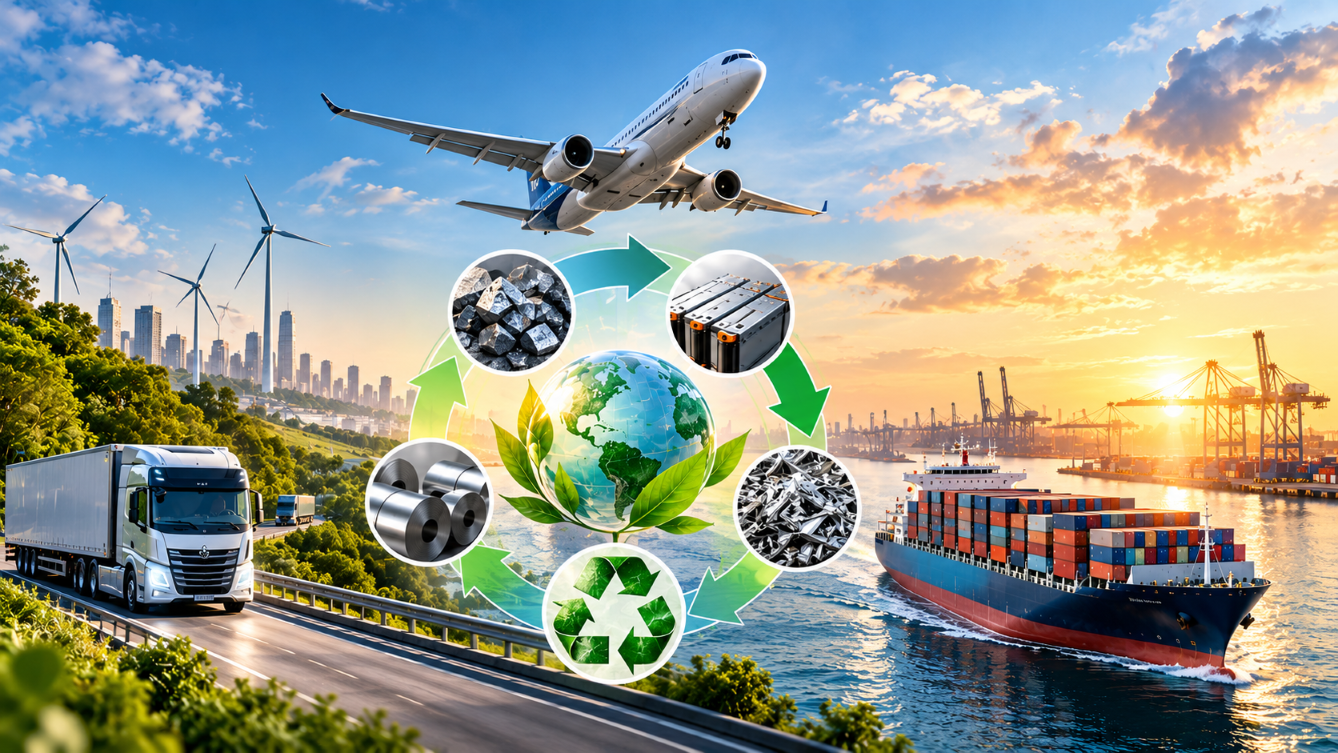
Beyond Net Zero: Why Transport Must Become More Circular
The transport transition is often described as a shift from fossil fuels to cleaner energy. Electric vehicles are replacing combustion engines, alternative fuels are entering shipping, sustainable aviation fuels are expanding, and renewable electricity is becoming increasingly important across the transport system.
But there is another question becoming harder to ignore: what happens to the materials behind the transition?
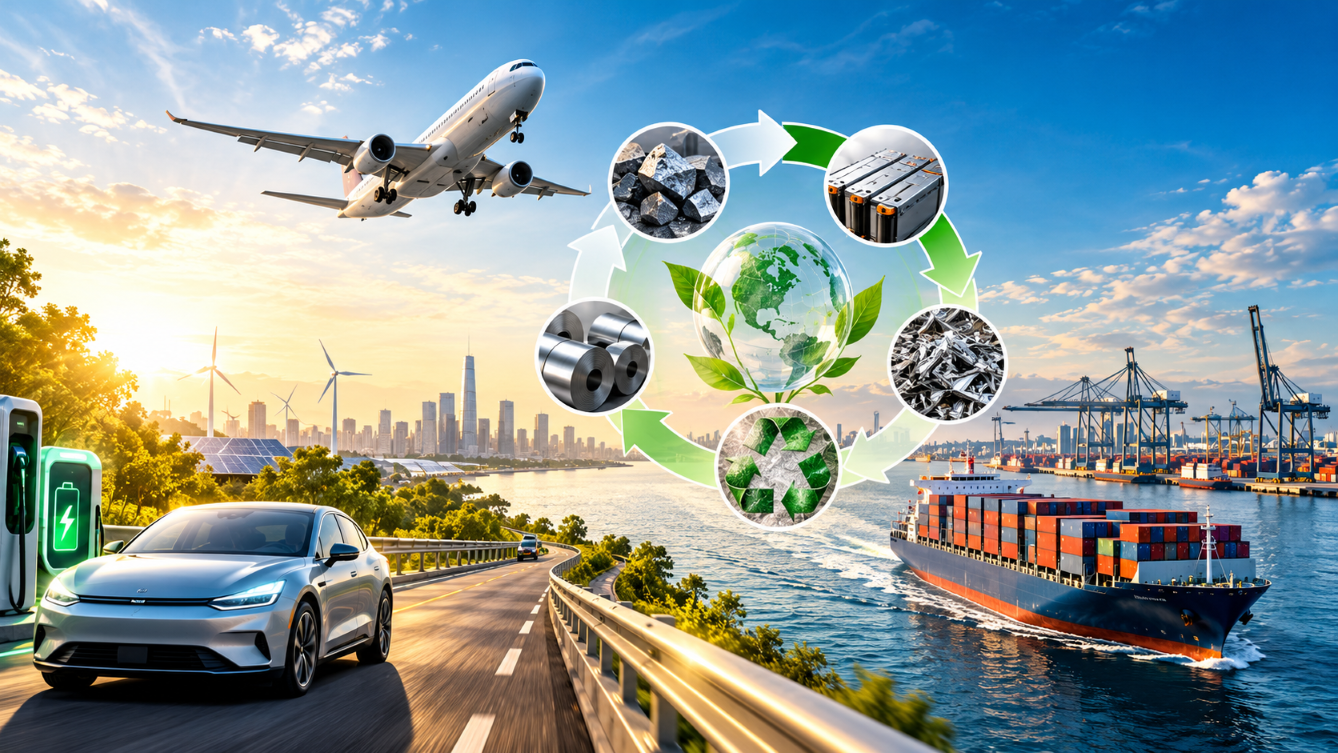
Electric vehicles require batteries and critical minerals. New-generation aircraft depend on advanced materials. Ships contain enormous quantities of steel and other components.
Charging networks, ports and transport infrastructure require substantial volumes of metals, equipment and construction materials. As the clean transport economy expands, simply replacing one technology with another will not be enough. The next phase of decarbonisation will increasingly involve a shift from a linear transport economy, in which materials are extracted, manufactured, used and discarded, towards a more circular model in which assets remain productive for longer and valuable materials are recovered and reused.
The material side of the transition
The scale of the clean technology transition is already changing demand for materials. The International Energy Agency estimates that the global market value of clean energy technologies reached almost $1.2 trillion in 2025, having grown by around 20% annually over the previous decade.
Electric cars, batteries and other clean technologies are becoming major industrial markets. That growth brings an important consideration. A transport system that reduces operational emissions but continually requires increasing quantities of newly extracted materials may reduce one environmental pressure while increasing others.
Critical minerals illustrate the challenge. Lithium, nickel, cobalt, graphite, copper and rare earth elements are increasingly important to electrification and other clean technologies. Supply chains for some of these materials remain geographically concentrated, creating exposure to trade restrictions, processing bottlenecks and geopolitical disruption.
Circularity offers another source of supply. The IEA's 2026 Global Critical Minerals Outlook estimates that recycling could eventually double its contribution to secondary supplies of key energy minerals by 2040. Average recycling rates across key energy minerals could rise from around 10% today to close to 20% by 2040 under current policy settings.
This means recycling is no longer simply an environmental consideration. It is becoming part of industrial and supply-chain strategy.
Batteries create a new circular economy challenge
Road transport provides one of the clearest examples. More than one in four cars sold globally in 2025 was electric, according to the IEA. At the same time, the agency estimates that around 1.2 million electric vehicle batteries could reach end of life in 2030, increasing to around 14 million by 2040.
This creates a future stream of valuable materials. But the timing matters. Most batteries installed in recent years are still operating, meaning the supply of end-of-life batteries has not yet caught up with the rapid expansion of battery manufacturing and deployment.
The IEA describes this as a structural time lag of roughly 15 years between the growth in battery demand and the arrival of comparable volumes for recycling. The industry therefore has an opportunity to build the collection, testing, reuse and recycling systems before the largest wave of end-of-life batteries arrives.
This is also a global issue. More than 85% of global battery recycling capacity is currently concentrated in China, according to the IEA. For emerging transport markets, developing local collection and recycling capabilities could become an important part of building resilient electric mobility ecosystems.
Longer asset lives can also reduce material demand
Circularity is not limited to recycling. The most resource-efficient asset is often the one that does not need to be replaced. Extending the useful life of vehicles, vessels, aircraft and components through maintenance, repair, refurbishment and remanufacturing can reduce the demand for new materials while retaining economic value.
Aviation provides a useful example. The 2025 ICAO Environmental Report notes that commercial aircraft are generally designed for more than 25 years and operated for more than 20 years on average. It also highlights the importance of maintenance, repair and overhaul activities in keeping aircraft and components in service for longer.
At the end of an aircraft's life, recovery rates can exceed 90% for some aircraft types, although many recovered materials are currently downcycled rather than returned to equivalent aerospace applications. The next challenge is therefore not simply to recycle more. It is to retain more of the original material value.
Shipping is already entering a new recycling era
Maritime transport offers another important example. The IMO's Hong Kong International Convention for the Safe and Environmentally Sound Recycling of Ships entered into force on 26 June 2025, establishing mandatory international requirements covering ship design, construction, operation and recycling.
The Convention is particularly significant because ship recycling sits at the end of a vessel's entire lifecycle. Ships contain large quantities of steel and other recoverable materials, but they can also contain hazardous substances such as asbestos, heavy metals and hydrocarbons.
Responsible recycling therefore has to address both resource recovery and environmental and worker safety. The IMO notes that using recycled steel requires only around one-third of the energy required to produce steel from raw materials. That gives ship recycling a direct connection to decarbonisation.
Recovering materials from an existing vessel can avoid some of the energy and emissions associated with producing virgin materials, while responsible recycling also prevents hazardous substances from being poorly managed. Designing for the second life The biggest opportunity may ultimately sit at the beginning rather than the end of an asset's life.
Transport equipment has traditionally been designed primarily around performance, safety, reliability and cost.
Circularity adds another consideration: what happens when the asset is no longer required in its original form?
Designing components for disassembly can make future recycling easier. Standardising components can support reuse. Material traceability can help identify valuable resources. Digital records can show what materials and components an asset contains and how they can be recovered.
These principles could influence everything from vehicle batteries and aircraft components to ships and port infrastructure. The objective is to make the end of an asset's first life the beginning of its next economic use.
Circularity could strengthen the transition itself
There is also a strategic reason for transport companies to take circularity seriously.
The energy transition is creating new dependencies. Electric mobility depends on batteries. Alternative propulsion depends on new equipment. Clean infrastructure depends on metals, electronics and construction materials.
Circular systems can reduce some of these pressures by keeping materials in circulation for longer. The IEA expects secondary supply from recycling to become increasingly important for critical minerals, although significant investment in collection, processing and recycling capacity will be required.
This creates opportunities for new industries around transport. Battery recovery, component remanufacturing, ship recycling, aircraft parts reuse, materials recovery and asset refurbishment could become increasingly important elements of the sustainable transport economy.
In other words, the transition could create not only cleaner transport systems, but also new circular industrial ecosystems around them.
From cleaner transport to smarter resource use
Net zero remains the central climate objective. But achieving it sustainably will require more than reducing the emissions produced while a vehicle, ship or aircraft is operating.
The full lifecycle increasingly matters. Where materials come from, how assets are maintained, how components are reused, what happens at the end of their useful lives and how much material can be recovered will all influence the environmental footprint of the transport system. This does not mean circularity replaces electrification, alternative fuels or energy efficiency. It complements them.
The transport transition of the next decade will therefore have two interconnected objectives: use cleaner energy and use resources more intelligently. The first reduces emissions. The second can reduce material pressure, strengthen supply chains and preserve value.
Together, they could take transport beyond simply achieving net zero towards a system designed for longer asset lives, lower resource intensity and greater material circularity.
18 October 2026
11 October 2026
21 September 2026